
Yannis Didaskalou
Omicroniota
Gen 260
Invited, alone, unruly, innocent, hospitable, solitary, kind, funny, wounded, empty, full, in pain, soaked, hollow, emotional, respectable, strange, older, younger, ruined, rational, absurd, isolated, nostalgic, foreign, pure, dirty, clean, transparent, forgotten, seated, risk-taking, abandoned, attentive, hopeful, dying.
In Omikroniota,* Yannis Didaskalou composes a small, tender hymn to the We – and to all our adjectives in plural – finding in the theatre of the absurd fertile ground to articulate the profoundly human unease and existential anxiety born of solitude.
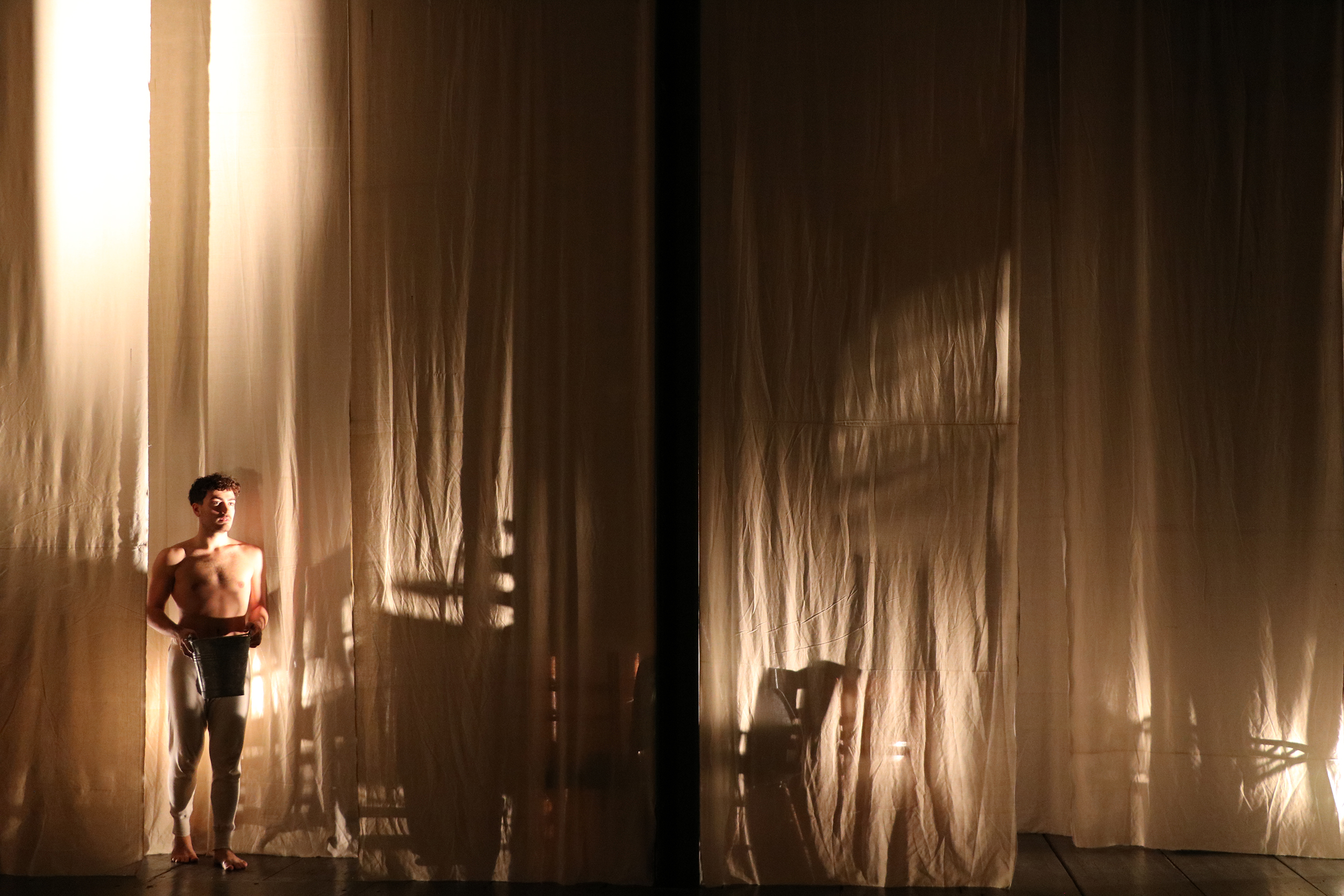
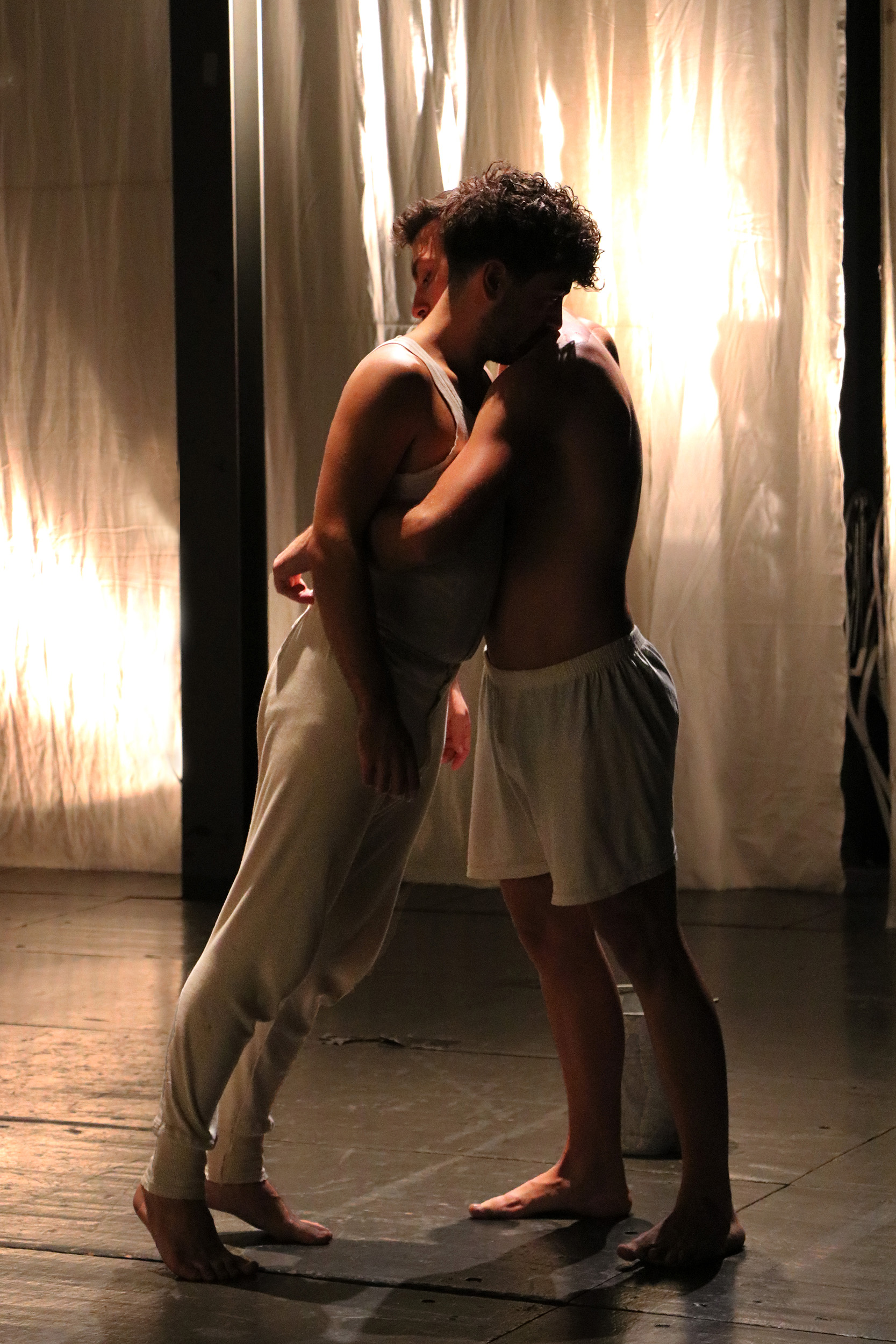
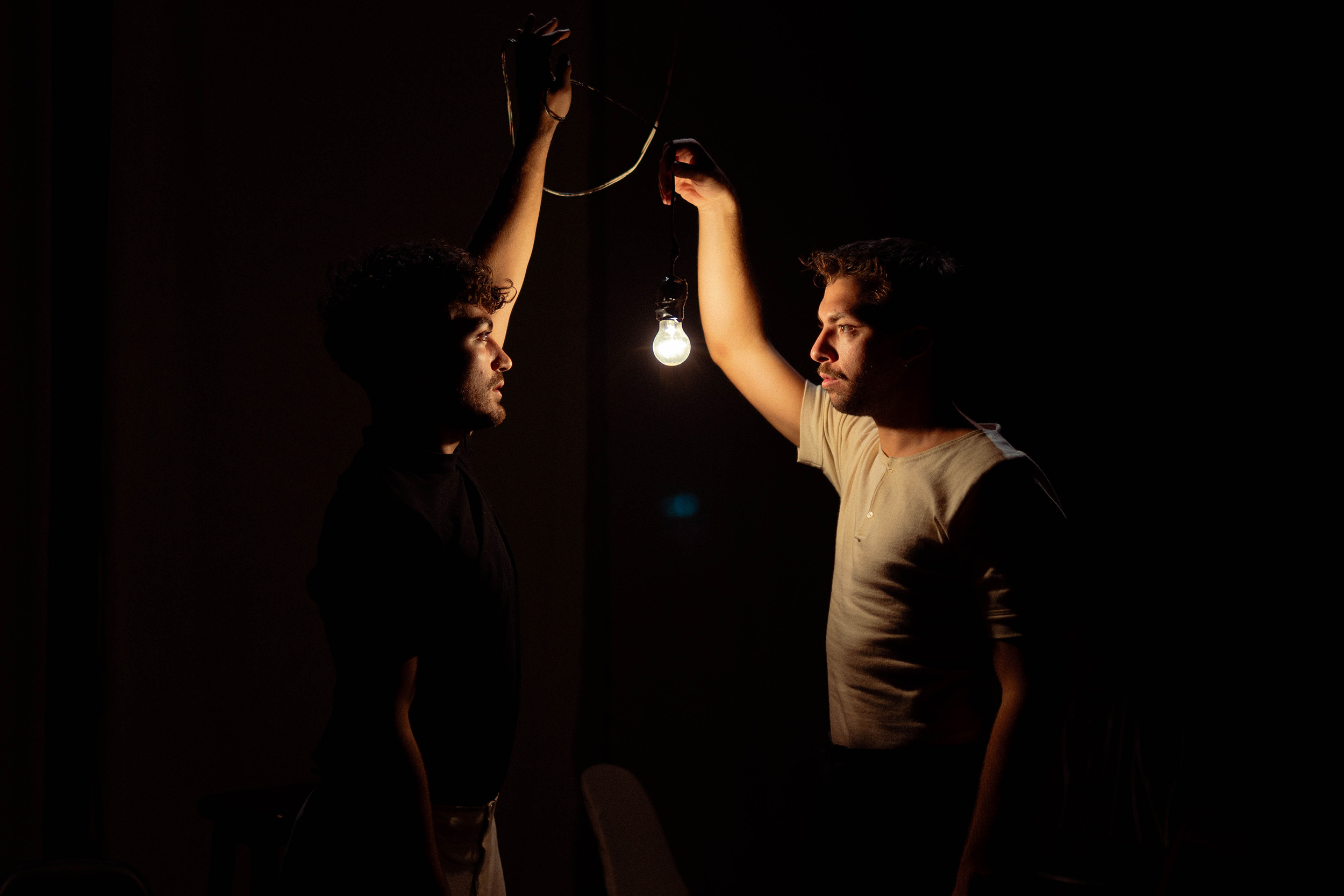
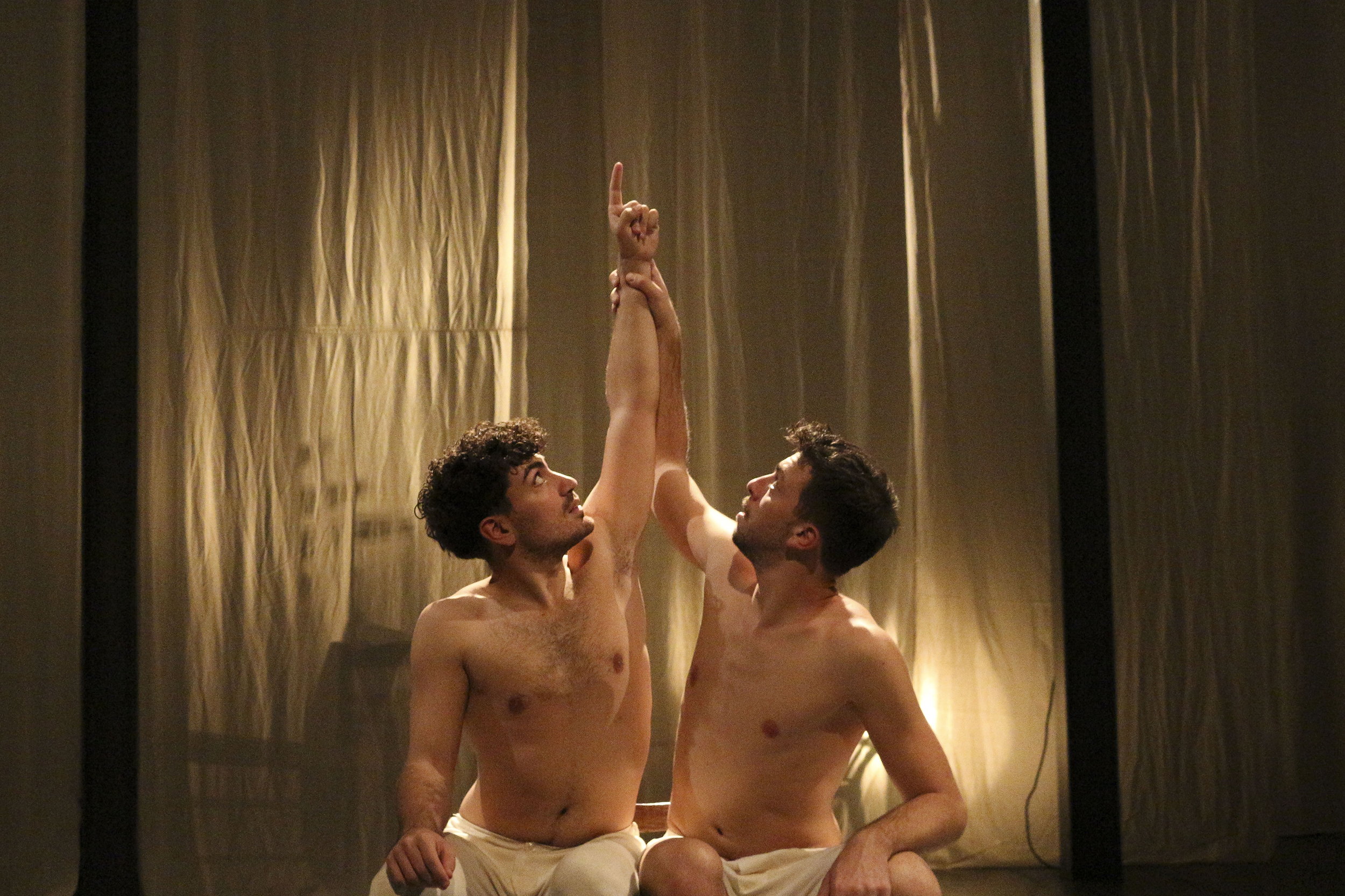
Two individuals stand on stage, bound in an intimate and enigmatic relationship, isolated within a world entirely their own. We observe their everyday life as they wait for guests: their habits, their quiet rituals, their private games. They wish to announce something urgent. Yet as the anticipated moment draws near, language seems to recede, to fracture, inviting memory and imagination inside the frame.
The guests they await are, ultimately, nothing more than part of an endless game the two characters replay across time and space. It is through this paradoxical pastime that each finds a way to speak to the other of what truly weighs upon them. The work probes those emotions left suspended, and our need to be recognised and loved by the other before it is too late.
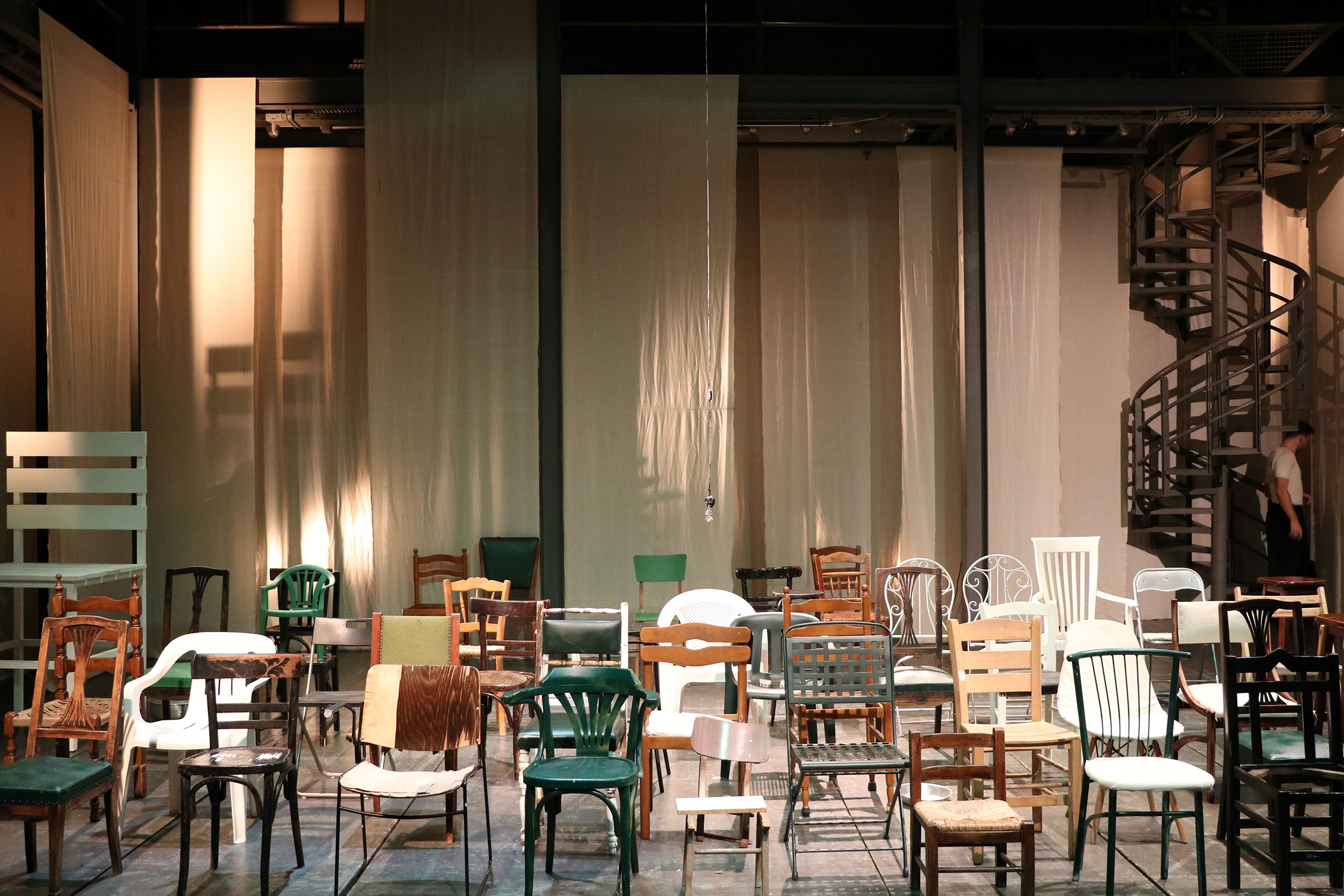
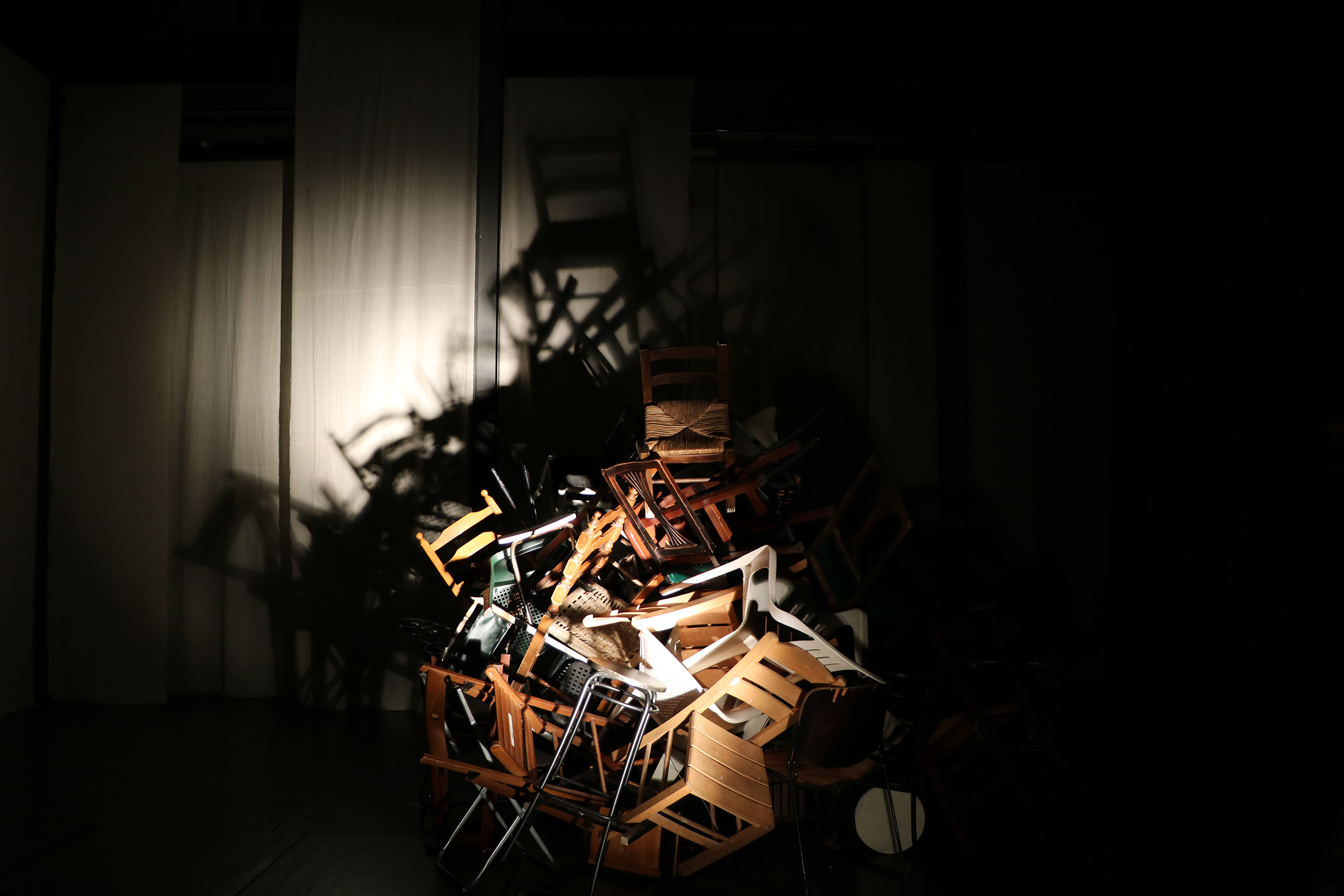
The action unfolds as a poetic parable on human relationships. The chairs on stage assume a central role, functioning as pieces in this peculiar diversion – objects that signal presences, absences, and the shifting dynamics between the two figures. At the same time, the water falling unceasingly from the ceiling becomes a visible marker of both inner and outer collapse.
In Omikroniota, a fragile, tender, and absurd world is revealed – a world in which the self desperately seeks a we, or, as one of the characters remarks while – once more – awaiting their guests: “Shall we get to know each other again, just before they arrive?”
* In Modern Greek, the plural of most adjectives is marked by the suffix -oi (“οι”, omicron–iota), a conventional inflectional ending indicating plurality (much like familiar suffixes in English).
This performance uses theatrical smoke and haze effects
Duration 60΄
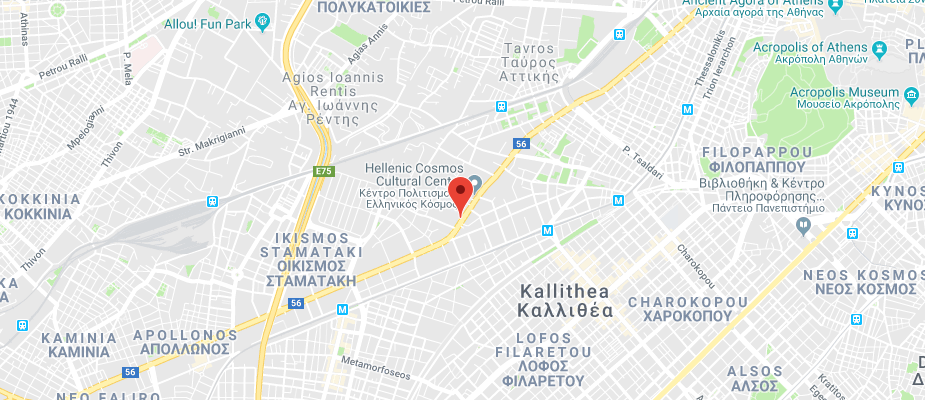
Peiraios 260 (B)
- 06/06/2026 at 22:00

all events
Music | Theatre | Dance | Education | Classical music | Performance | Premiere | Greek Debut
Ancient Theatre of Epidaurus | Little Theatre of Ancient Epidaurus | Peiraios 260 | Odeon of Herodes Atticus | Ancient Stadium Of Epidaurus | Ancient Agora of Athens | Sychrono Theatro | Ancient Theatre of Epidaurus | Exhibition Hall | Theater 104 | The Greek Film Archive Foundation
all venues