Angélica Liddell
Seppuku. The Funeral of Mishima or the pleasure of dying.
Mishima taught me, from adolescence, an indivisible trinity: eroticism, beauty, and death.
They are all one and the same.
Erotic death, ritual death, beautiful death.
In essence, death as an aesthetic ideal, and aesthetics as a life’s purpose
– a romantic yearning born from the sexual nature of death, from its brutal lyricism
A. L.
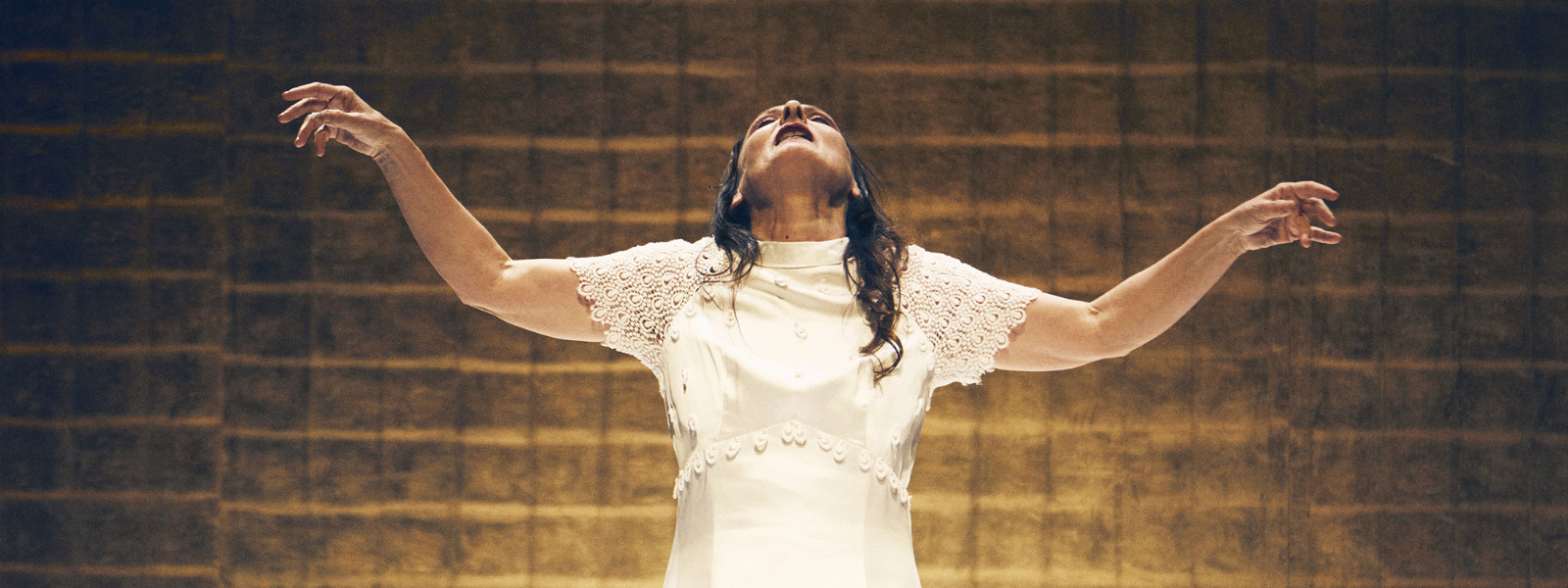
In November 1970, following a failed symbolic uprising aimed at restoring imperial power in Japan, the writer Yukio Mishima (1925–1970) brought his own life to an end through seppuku (or hara-kiri in colloquial Japanese), transforming his own body into his ‘final’ statement. Drawing on the spiritual code of the samurai – at whose core lies the injunction to “die mentally” each morning so as to no longer fear death – Angélica Liddell, one of the most radical voices of the contemporary Spanish stage, approaches seppuku as a meditation on freedom, discipline, beauty, and the limit. The work assumes the form of a funeral hymn that, devoid of any embellishments, is dedicated to all those who have taken their lives, embodying on stage the violent, lyrical pull of death as both an aesthetic ideal and an existential choice, set against the erosion of the spirit. With a language that resists easy categorisation, the restless and uncompromising creator delivers one of the defining works of contemporary European theatre-performance, a work that fuses ritual, personal confession, and philosophical contemplation on death, inspired by Mishima. Taking as its point of departure his notion of an indivisible trinity – eroticism, beauty, death – Liddell composes a performance-poem of farewell to life, a jisei no ku.
The dramaturgy is fuelled by Liddell’s own experiences. Recalling her adolescent initiation into Mishima, the staging unfolds upon a traditional Nō theatre stage and incorporates references to and excerpts from the Japanese author’s writings, alongside material drawn from the artist’s own trajectory. Music and live Japanese flute intertwine with a multinational ensemble of performers, transforming the ‘funeral of Mishima’ into a dense stage architecture of image, sound, and movement – where the beautiful meets the grotesque and the demonic, and where life is affirmed at the very moment of its eclipse.
Seven years after Génesis 6, 6-7, Liddell returns to the stage of Peiraios 260 to once again test the limits of our endurance – and, once more, leave us speechless.
Content warning: This performance contains graphic and highly intense material, nudity, live bloodletting on stage, the use of animal organs, and scenes of self-harm. Suitable for ages 18+.
Please note that the English surtitles may not be fully visible from the first five rows of seats.
Duration 120΄
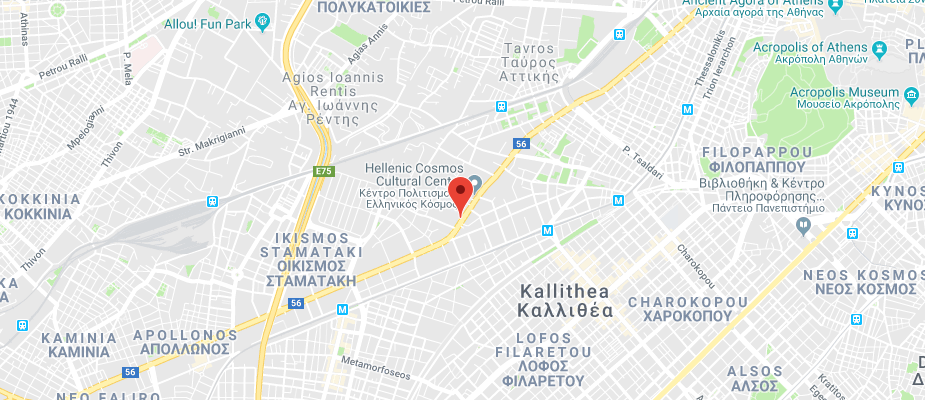
Peiraios 260 (D)
- 28/06 until 29/06/2026 at 21:00
- 30/06/2026 at 21:30
MEDIA KIT / PHOTOS
all events
Music | Theatre | Dance | Education | Classical music | Performance | Premiere | Greek Debut
Ancient Theatre of Epidaurus | Little Theatre of Ancient Epidaurus | Peiraios 260 | Odeon of Herodes Atticus | Ancient Stadium Of Epidaurus | Ancient Agora of Athens | Sychrono Theatro | Ancient Theatre of Epidaurus | Exhibition Hall | Theater 104 | The Greek Film Archive Foundation
all venues