
George-Emmanuel Lazaridis – Raining Pleasure
Αmerica by Manos X – Part II
If you look closely at the cover of Reflections by Manos Hadjidakis and the New York Rock & Roll Ensemble, you might notice another band shimmering faintly in the water before the original quintet: Raining Pleasure. Thirty-four years after the album’s release, they became, in a sense, its reflection: a group that unexpectedly entered Hadjidakis’s orbit, offering their own reading of the music of Reflections, and with it, yet another glimmer of the composer’s enduring genius.
Hadjidakis’s tenure in New York (1966–1972) has since taken on an almost mythic quality, leaving behind a trail of vivid anecdotes: encounters with defining figures of the era – among them Grace Slick of Jefferson Airplane – a personal immersion into the psychedelic mythology of the era, and a deep engagement with the unprecedented music being forged by a generation that seemed to hold the blueprint of another world in its hands. Who, after all, can forget his striking remark, when he once described Lena Platonos as “a female Syd Barrett?”
And yet, Hadjidakis could never absorb these influences unfiltered, however much he may have been captivated by the “exquisite noise” of bands like the Rolling Stones. At the centre of his musical world remained the Greek Song, tempered by the refinement of the classical tradition. Still, beneath the surface, there lingered a desire to engage with this extraordinary musical awakening on his own terms. He found his ideal counterparts in the New York Rock & Roll Ensemble. At their core were three Juilliard-trained musicians, armed with formidable classical discipline and virtuosity across multiple instruments – among them the late Michael Kamen, who would later collaborate with David Bowie, Pink Floyd, Metallica, and many others. The convergence of their charged electric energy with Hadjidakis’s early baroque leanings – already evident in the seminal Gioconda’s Smile – gave birth to one of the most distinctive albums of its time: a work that fused progressive rock with the deep folk sensibility of the composer’s musical language. With its finely judged orchestration and performance, the album achieved a rare balance, sounding at once unmistakably Greek and strikingly universal.
A leap forward in time: in a studio just outside Cologne in 2004, Raining Pleasure complete their recording of Reflections, joined by saxophonist David Lynch and Elli Paspala on the closing track, “Noble Dame”. A band of innate melodic sensitivity and distinctly European orientation, they recognised their kinship with the key traits of Reflections – its English lyrics, its rock-infused pulse – and delivered a reinterpretation of remarkable finesse and emotional depth. The album became a crowning moment in their discography, while also opening new paths of international recognition through its live presentations across various stages.
This rare alignment of musical forces returns to life this summer. And if we look closely at the stage of the ancient theatre, as Raining Pleasure unfold the gossamer world of Reflections, we may glimpse a reflection forming, before the orchestra or suspended in the night sky: an electric ensemble under the baton of a composer-magician – the New York Rock & Roll Ensemble and the eternal Manos Hadjidakis.
*
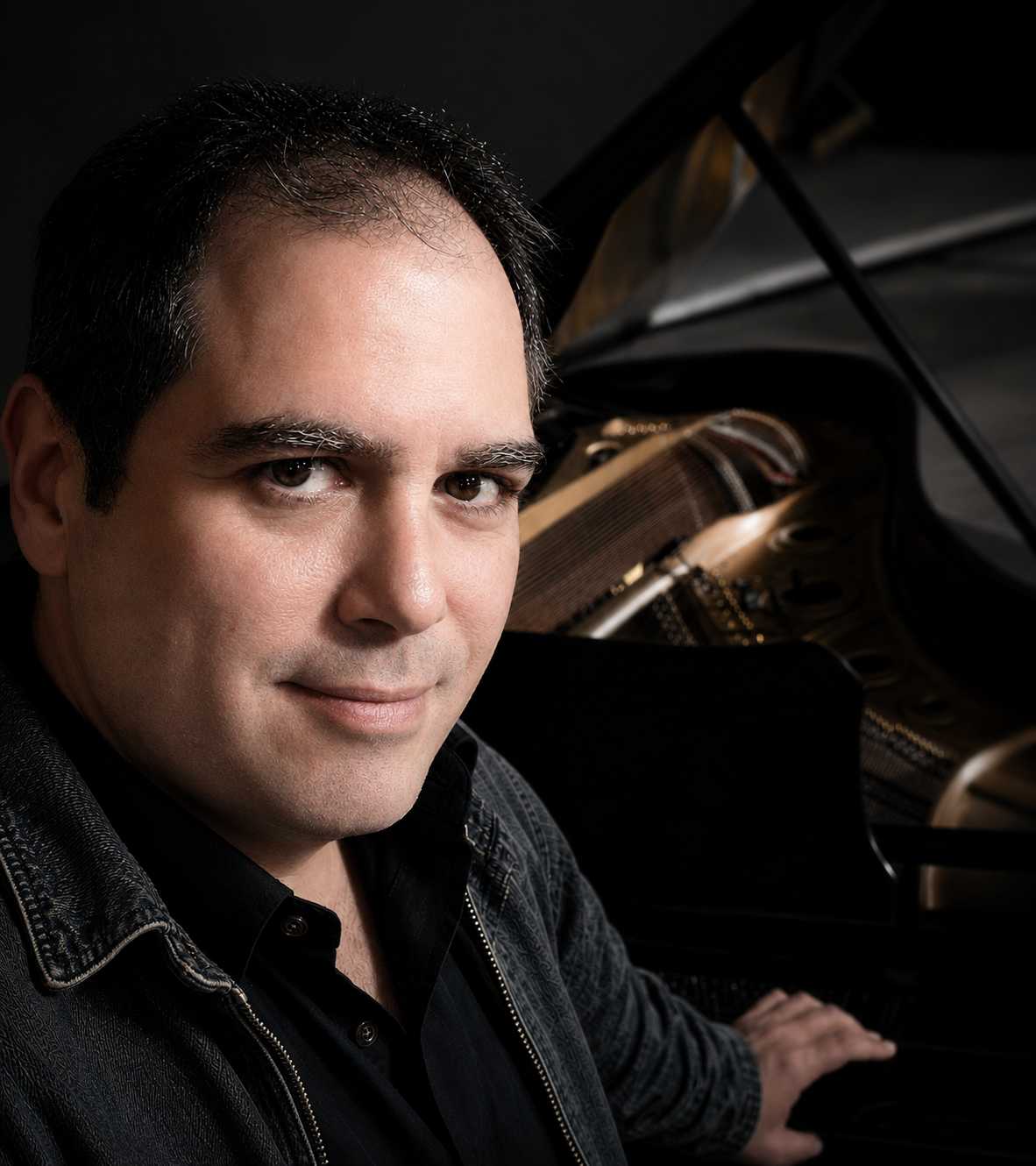
The evening will open with another work from Hadjidakis’s American years. Conceived in London in the summer of 1969 and recorded in New York in December 1971, Rhythmology brings together six pairs of pieces for solo piano, revealing a needle-fine and highly personal engagement with the archetype of the rembetiko song. While earlier works of the composer included direct arrangements, Rhythmology evokes the essence of rembetiko through an entirely original compositional lens. As Hadjidakis writes in the album liner notes: “From the outset, I wanted to p l a y s e r i o u s l y, with simple rhythms and with ‘hasapika’ interwoven among them, governed by constellations. Above all, I wanted to recall very old ways – the orthodox ones – of the bouzouki and rembetiko songs. I believe I had reached a point where I could listen to them without emotional excess, from a distance, more technically, and with all their deep erotic and sacred content intact.” Dedicated to George Seferis – “a living Seferis who continues to walk among us” – this utterly idiosyncratic work from Hadjidakis’s discography will be performed live by the pianist George-Emmanuel Lazaridis. With thirty-five years of ceaseless presence on the international music scene as a soloist, composer, and educator, George-Emmanuel Lazaridis has devoted a body of work of rare value to the interpretation and processing of the Hadjidakian idiom – an artistic contribution that stands worthily alongside his broader international career and his recognition as one of the most formidable pianists of our time. His appearance on the evening of 17 June is expected to consolidate that his performances stand “beyond comparison” (BBC Music Magazine, Adrian Jack), and are “so distinctive that they retain their singularity even when measured against great interpretations by Argerich, Horowitz, Brendel, and Zimerman” (Gramophone Music Magazine).
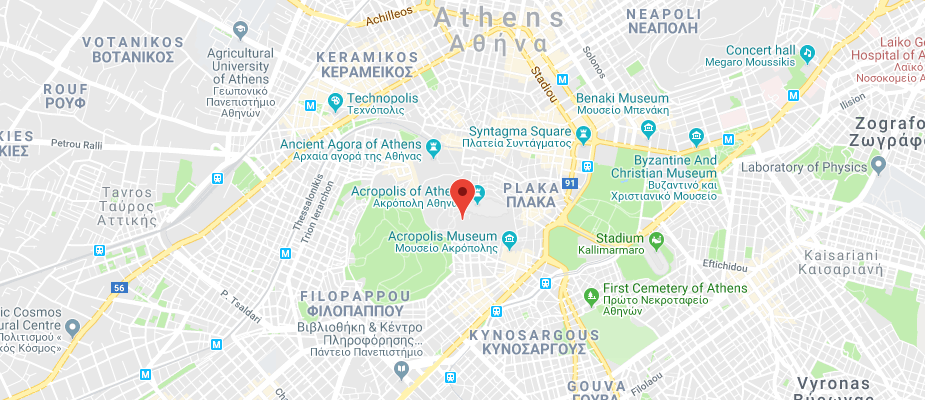
Odeon of Herodes Atticus
- 17/06/2026 at 21:00


all events
Music | Theatre | Dance | Education | Classical music | Performance | Premiere | Greek Debut
Ancient Theatre of Epidaurus | Little Theatre of Ancient Epidaurus | Peiraios 260 | Odeon of Herodes Atticus | Ancient Stadium Of Epidaurus | Ancient Agora of Athens | Sychrono Theatro | Ancient Theatre of Epidaurus | Exhibition Hall | Theater 104 | The Greek Film Archive Foundation
all venues