

National Theatre of Greece - Dimitris Karantzas
Alcestis
By Euripides

A contemporary parable of a profound political gravitas, a dual-natured work, a constant hovering between life and death, playfulness and nightmare, harrowing tragedy and unannounced drollery, Euripides’ Alcestis unfurls at the Ancient Theatre of Epidaurus, presented by the National Theatre of Greece and directed by Dimitris Karantzas.
In the play, Admetus can only evade Death’s claim if someone else consents to die in his place. His spouse, Alcestis, offers herself as a fulcrum of this curious exchange. Her sacrifice unfolds publicly, before the eyes of the citizens, as a preordained killing – an act that, from today’s perspective, can only be read as femicide, legitimised by the prevailing societal and political order.
Alcestis is the sole surviving work from the body of ancient Greek tragedy to bring not only Death onto the stage, but also Resurrection. And yet the question remains unresolved: what does it mean to restore life once the sacrifice has already been made? What lies within Alcestis’ deafening silence? And what is the true cost of salvation when it rests upon the self-sacrifice of the most vulnerable?
Dimitris Karantzas orchestrates Alcestis as a stage experiment, in which music, sound, movement, and the oscillations of theatrical tone coexist organically, conjuring a fluid, liminal, and ever-morphing world. With a remarkable cast of actors and collaborators, the performance becomes a staged argument that does not merely recount the myth but poses burning questions about power, gender, sacrifice, and society’s responsibility towards the perishing of the eponymous heroine – and of others beyond her.
With Greek and English surtitles



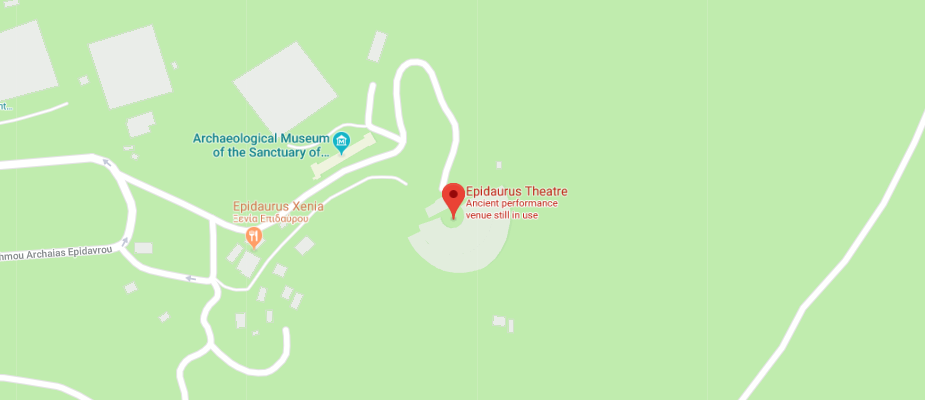
Ancient Theatre of Epidaurus
- 17/07 until 18/07/2026 at 21:00


all events
Music | Theatre | Dance | Education | Classical music | Performance | Premiere | Greek Debut
Ancient Theatre of Epidaurus | Little Theatre of Ancient Epidaurus | Peiraios 260 | Odeon of Herodes Atticus | Ancient Stadium Of Epidaurus | Ancient Agora of Athens | Sychrono Theatro | Ancient Theatre of Epidaurus | Exhibition Hall | Theater 104 | The Greek Film Archive Foundation
all venues