

National Theatre of Greece - Eleni Efthymiou
The Trojan Women
By Euripides

The quintessentially humanistic and fiercely anti-war work by the great tragedian is brought to life by a group of twenty-two performers – including members of the En Dynamei ensemble – of all ages, with and without disabilities, accompanied by live music on stage. At the Ancient Theatre of Epidaurus, the National Theatre of Greece presents Euripides’ The Trojan Women, directed by Eleni Efthymiou, in a performance probing the perennial horrors of war and loss as collective memory, but above all, the female body as a universal emblem of human tragedy.
In Euripides’ The Trojan Women, the bodies of women were not always held captive. Though embedded in a deeply patriarchal society, they were, by the standards of their time, free, possessing choices, dreams, and the possibility of a dignified life. Yet, as the end of an era approaches – of a life once glorified and at times merely bearable, of their very History – the Trojan women articulate the horror of war through the prism of the (female) body, which senses its imminent objectification and dehumanisation.
In Eleni Efthymiou’s staging, The Trojan Women are not only the beautiful, robust bodies of the privileged royal household awaiting their final sorting. Their bodies are mixed with others – underage, disabled, elderly – bodies that even before the war never governed their own fate and are rarely granted the privilege of narration; bodies the system ostentatiously ignores, which power chooses either to manage or to annihilate. After all, death excels in being “just”, as he equates the more with the less, before condensing it to nothing.
And if all these skins, souls, gazes, wombs, and memories can be symbolically seen as the eternally oppressed femininities of this world, can these subjects regain their right of choice? And in what way? By crying out in rage? By mourning or laughing in the face of chaos and deadlock? Is there, after all, a way for these heroines to repossess their bodies?
With Greek and English surtitles




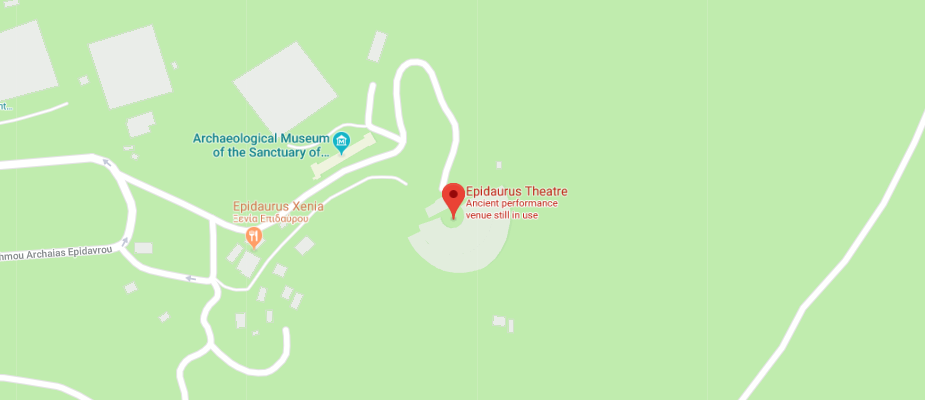
Ancient Theatre of Epidaurus
- 31/07 until 01/08/2026 at 21:00


all events
Music | Theatre | Dance | Education | Classical music | Performance | Premiere | Greek Debut
Ancient Theatre of Epidaurus | Little Theatre of Ancient Epidaurus | Peiraios 260 | Odeon of Herodes Atticus | Ancient Stadium Of Epidaurus | Ancient Agora of Athens | Sychrono Theatro | Ancient Theatre of Epidaurus | Exhibition Hall | Theater 104 | The Greek Film Archive Foundation
all venues